 VITA
What is autophagy, and when does it start during a fast?
What autophagy, the way cells recycle their own parts, actually is, how it relates to fasting and why no one can give a reliable hour for it in humans.
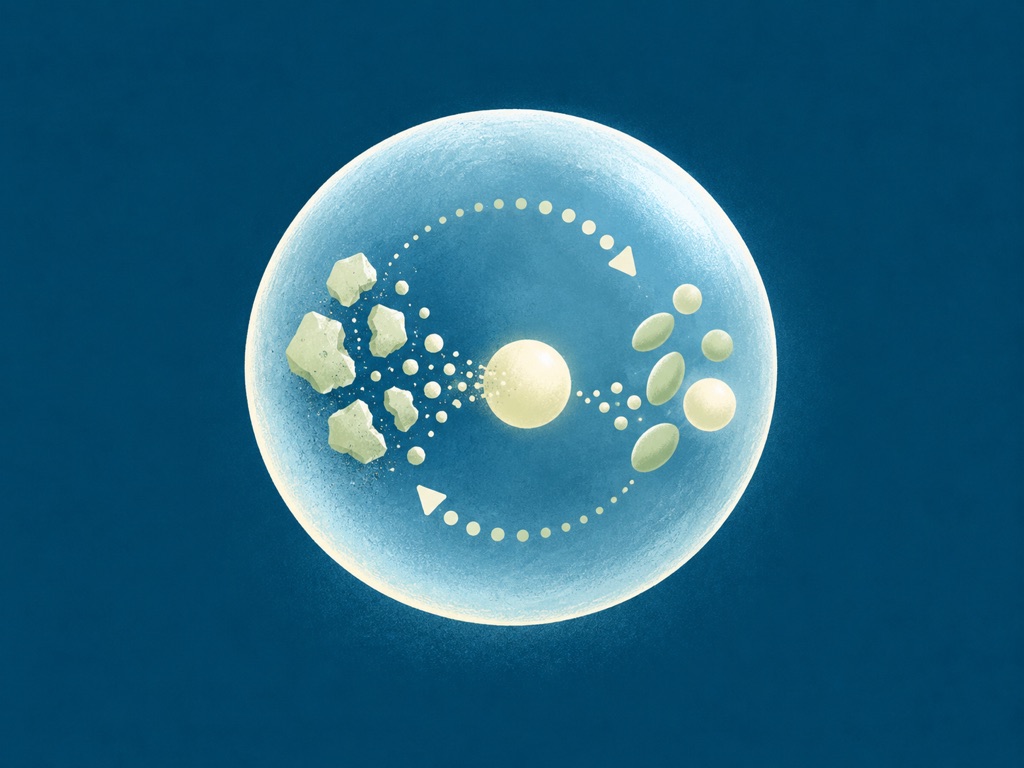
Autophagy is your body's process of reusing old and damaged cell parts. Cleveland Clinic calls it the cell's recycling system: the cell takes apart the pieces it no longer needs and turns whatever can be salvaged into new parts. The word comes from the Greek for 'self' and 'eat', so it roughly means 'self eating'.
What happens inside the cell
According to a review by Bagherniya and colleagues, autophagy is a protective housekeeping process that clears out damaged organelles, long lived misfolded proteins and invading microbes. Along the way the cell recovers building blocks and energy and adapts to stress. According to Cleveland Clinic, autophagy kicks in when cells are deprived of nutrients or oxygen or are damaged.
How it relates to fasting
The same review counts fasting and calorie restriction among the most potent non genetic triggers of autophagy, with evidence that it increases in a wide range of tissues and organs when food is withheld.
So at what hour does it start?
For humans, there is no reliable answer. Cleveland Clinic says animal studies suggest autophagy may begin between 24 and 48 hours of fasting, but there is not enough research on its timing in humans. The source adds that most studies on autophagy and disease were also done in mice and rats, not in people. So exact hours such as 'autophagy starts at hour 16' should not be read as established facts about humans.
Why it is hard to measure in people
In humans, researchers look at autophagy through indirect markers, and those markers do not always point the same way. In a study where 8 healthy men fasted for 72 hours, the autophagy marker LC3B-II in muscle rose by about 30 percent. But p62, which is expected to fall during autophagy, also rose by about 10 percent, and the researchers wrote that this made the result hard to interpret. In another study, where volunteers fasted for up to 4 days, only neutrophils among the white blood cells studied showed signs of autophagy.
There is even less human data on daily eating windows. In a 4 day study with 11 people, eating between 8 a.m. and 2 p.m. instead of between 8 a.m. and 8 p.m. increased the expression of LC3A, a gene linked to autophagy, in blood cells measured in the morning. The authors say this may increase autophagy; they do not present it as a firm result.
According to Cleveland Clinic, there is also not enough research to support triggering autophagy as a wellness strategy. That is why VITA's 'Deepening ketosis' stage card points out that the 24 to 48 hour range comes from animal data. If you are thinking about a long fast, talk to your doctor first; as Cleveland Clinic reminds us, fasting may suit some people and put others' health at risk.
Sources
- Cleveland Clinic, Autophagy: Definition, Process, Fasting & Signs
- Bagherniya et al. 2018, The effect of fasting or calorie restriction on autophagy induction (Ageing Research Reviews)
- Vendelbo et al. 2014, Fasting increases human skeletal muscle net phenylalanine release (PLoS One)
- Pietrocola et al. 2017, Metabolic effects of fasting on human and mouse blood in vivo (Autophagy)
- Jamshed et al. 2019, Early Time-Restricted Feeding Improves 24-Hour Glucose Levels (Nutrients)
VITA is for information only; it is not medical advice, diagnosis or treatment. If you are pregnant or breastfeeding, under 18, living with diabetes or taking medication that lowers blood sugar, have a history of an eating disorder or an ongoing illness, talk to your doctor before you fast.