 VITA
Estimating portions by eye
A practical guide to using your hand and plate as rough references, learning from a few measurements, and using photo calorie estimates with their limitations in mind.
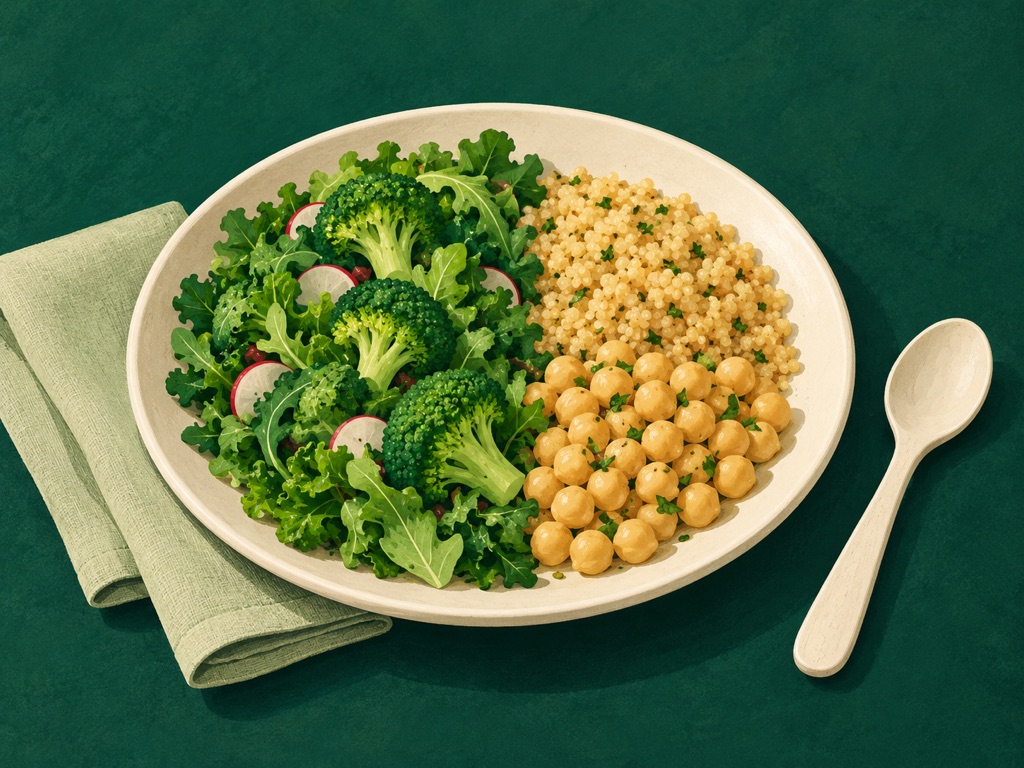
You cannot measure every bite when eating out. Estimating by eye can help you describe roughly what is on your plate. NIDDK defines a portion as the amount you choose to eat at one time; the serving size on a food label does not tell you how much you should eat. That distinction matters: estimating an amount is different from deciding whether it is enough or appropriate for you.
Use your hand as a rough reference
The hand portion guide from HPRC, based at the US Uniformed Services University, gives approximate comparisons you can use without a measuring cup. Because hands and food shapes vary, do not treat these as exact weights. Some of the guide's comparisons are:
- Your open palm, excluding fingers, can help you picture a piece of cooked meat, fish or poultry weighing roughly 85 grams. This is the rounded equivalent of the guide's 3 ounces.
- You can use your fist as a volume reference for raw vegetables, and your cupped palm when looking at cooked vegetables, beans or grains.
- Your thumb represents roughly two tablespoons of peanut butter or salad dressing. You cannot turn that comparison into a weight or calorie value for every food.
A very thick piece of meat and a thin slice may cover the same palm area without being the same amount. How high food is piled in a cupped hand also changes the estimate. Keep the comparison consistent: do not count a thin piece one day and several stacked pieces the next as one palm. These are differences you may encounter in the kitchen, rather than a test establishing the accuracy of the hand method.
Plate proportions tell you something different from quantity
In the plate example used for CDC diabetes education, half the space holds nonstarchy vegetables, one quarter a protein source and one quarter carbohydrate foods. This is a way to see the composition of a meal, rather than a prescription giving everyone the same quantity. The same proportions fit a large or a small plate, while the total amount changes. If you have diabetes, do not work out a carbohydrate target from that picture yourself; agree it with your doctor or dietitian.
Measure a few times, then compare
NIDDK says you do not need to measure everything you eat for life; measuring until you learn typical portions may be enough. At home, you could measure what you usually put in a familiar bowl once and look at how it sits. Compare with the same bowl next time. If you measured rice after cooking, match the record to cooked rice; do not interchange raw and cooked amounts. That last distinction comes from VITA's food recording rules.
How much can a photo tell you?
A meta-analysis by Ho and colleagues, combining 13 studies and 606 participants, found overall under-reporting of energy intake with image-based methods. The authors note that these methods, like traditional ones, have serious measurement errors. The studies used different methods, so their results cannot be read as an error rate for VITA's photo estimate. Treat the calorie amount calculated from a photo as an estimate.
A review by Gemming and colleagues also reports that images can help reveal foods missed from records, but estimates can be too low if suitable images are not captured before eating. Keeping the whole plate visible and taking the photo before starting are practical steps drawn from that warning. Bread or drinks outside the frame cannot be assumed to have been included from a photo of the meal alone.
Use a photo as a starting point in VITA
VITA's photo calorie estimate gives you an editable result for foods and portions. Before saving, check what it identified and how much it suggested. If you know the recipe, oil or sauce added, check those too. The calorie value is an estimate; appearing as a single number does not make it an exact measurement of energy.
- Check the food name first. Two similar looking dishes may contain different ingredients.
- Compare the portion with your own plate. A hand reference, a familiar bowl or the amount on a package may help.
- Distinguish the serving in the photo from what you actually ate. Adjust the record if you left some or added more later.
- Do not infer allergen safety or that a dish is definitely vegan from a photo. VITA does not provide that assurance.
If measuring starts to feel difficult
The NHS lists very strict food routines and spending a lot of time worrying about your body among signs of eating disorders, and recommends seeing a doctor if you suspect a problem. According to Cleveland Clinic, people who are pregnant or breastfeeding and children should not do intermittent fasting; those with an eating disorder history should not try it without medical supervision. If you have a health condition or take regular medication, discuss fasting with your doctor first. This guide provides neither a calorie target nor a treatment plan.
Sources
- NIDDK, Food Portions: Choosing Just Enough for You
- HPRC, Your handy guide to portion sizes
- CDC, Diabetes Meal Planning
- Ho et al. 2020, Validity of image-based dietary assessment methods: A systematic review and meta-analysis (Clinical Nutrition)
- Gemming et al. 2015, Image-assisted dietary assessment: a systematic review of the evidence (J Acad Nutr Diet)
- NHS 111 Wales, Eating disorders: Overview
- Cleveland Clinic, Intermittent Fasting: What It Is, Benefits and Schedules
VITA is for information only; it is not medical advice, diagnosis or treatment. If you are pregnant or breastfeeding, under 18, living with diabetes or taking medication that lowers blood sugar, have a history of an eating disorder or an ongoing illness, talk to your doctor before you fast.