 VITA
Weekly preparation for your eating window
Keep protein and fibre sources ready, use a few ingredients across different meals, and store cooked food safely without committing the whole week to a rigid menu.
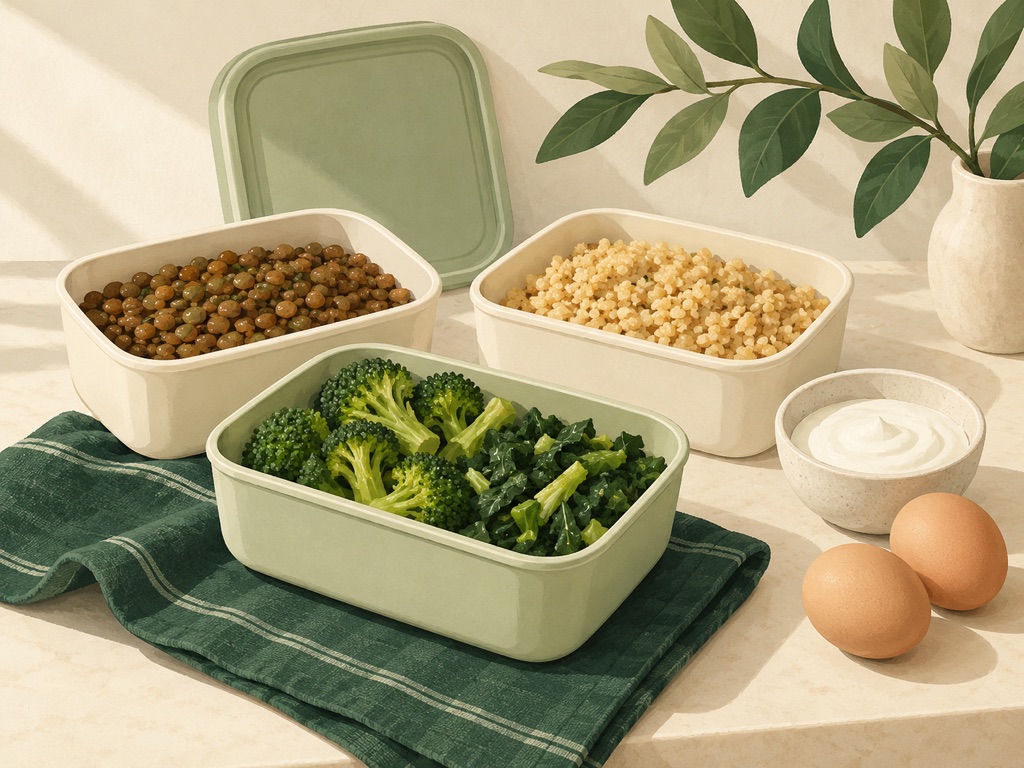
Deciding what to cook from scratch every day when your eating window opens can be tiring. Preparation can start with keeping a few basics ready. The NHS Eatwell Guide also says you do not need a perfect balance at every meal; you can look across the day or week. Think of weekly preparation in that way: foods you can put together when needed, with meals that can change to fit your day.
Count the meals you will actually eat
Which days will you be at home, and when will you need to take a meal with you? Start there. If you cannot eat at the same time each day, do not shop for a schedule that assumes nothing changes. Check what you already have, then list what is missing for a few meals. The aim is to leave enough room for nourishment within your chosen hours. This is VITA's practical suggestion for making everyday routines easier.
Think about protein and fibre together
The NHS lists eggs, fish, meat and pulses among protein sources, and notes that beans, chickpeas and lentils provide both protein and fibre. Make room on your shopping list for a few options that suit you. You do not need the same food at every meal: you might choose eggs one day and pulses or fish another. If you do not eat meat, you can plan the protein part of your preparation around pulses and other sources that fit your diet.
Do not rely on one food for all your fibre either. The NHS fibre guide recommends choosing varied sources and including wholegrains, vegetables, fruit and pulses during the day. Pairing bulgur, wholegrain bread or oats with vegetables and a protein source gives you a starting point. The NHS includes fresh, frozen and canned fruit and vegetables too; you do not have to prepare everything fresh on the same day.
Use one preparation across several meals
- Choose a pulse. Chickpeas you cook or buy ready to use could go into a salad at one meal and beside a main dish at another.
- Prepare a grain. Keeping cooked bulgur and vegetables in separate containers lets you choose the amounts again when you eat.
- Make vegetables easy to reach. Decide how much to wash and prepare, and which frozen options to keep, based on what you will actually need.
- Think about a backup meal too. Wholegrain bread with suitable foods such as eggs or yogurt may reduce the need to cook a new dish every time.
This list offers a few kitchen ideas based on the NHS food groups. It does not set a daily protein or calorie amount, or suggest squeezing all your food into fewer meals because your window is shorter. If your preparation is not enough or you struggle to fit in meals, you can review the routine with a doctor or dietitian instead of forcing the timing.
Weekly preparation does not mean seven days in the fridge
The UK Food Standards Agency (FSA) recommends cooling properly cooked food and refrigerating it within two hours, then eating leftovers within 48 hours or freezing them if that will not be possible. So do not leave every container you prepared on Sunday in the fridge until Friday. Separate what you will eat soon from what you will freeze for later, and note the storage time so you remember when it was prepared.
Cooked rice has a shorter limit: the FSA says to cool it quickly, ideally within one hour, keep it refrigerated for no more than one day, and reheat only once until steaming hot throughout. Do not apply the general 48 hour leftovers rule to rice. If rice is part of your weekly plan, account for this before you cook, rather than after shopping.
The FSA chilling and defrosting guide recommends keeping the fridge at 0 to 5°C, thawing food in the fridge and using it within 24 hours of fully defrosting. The general reheating rule is also just once, until steaming hot throughout. Follow the storage and use instructions on the packaging as well. How food cools and is stored comes before how convenient the preparation feels.
Make a small selection from the recipe library
You can choose recipes that fit your week in VITA's Explore section. For example, 'Red lentil soup with carrot', 'Bulgur pilaf with vegetables' and 'Vegetable omelet' may give you ideas for different preparations. You do not have to cook them all on the same day. Check the ingredients, serving count and method; do not assume oil you add or foods served alongside are included in the recipe calculation. Recipe values are estimates calculated for the stated ingredients and servings too.
Plan with support if you have specific health needs
If you have kidney disease, do not increase protein on your own; NIDDK recommends agreeing the amount with a doctor or dietitian. According to Harvard T.H. Chan, people who are pregnant or breastfeeding, growing adolescents and those with anorexia or bulimia should not do intermittent fasting. If you have diabetes or take medicine that requires food, speak to your doctor before fasting. Weekly preparation is not a reason to change a prescribed eating or medication plan.
Sources
- NHS, The Eatwell Guide
- NHS, How to get more fibre into your diet
- Food Standards Agency, Cooking your food
- Food Standards Agency, Home food fact checker
- Food Standards Agency, How to chill, freeze and defrost food safely
- NIDDK, Healthy Eating for Adults with Chronic Kidney Disease
- Harvard T.H. Chan School of Public Health, Diet Review: Intermittent Fasting for Weight Loss
VITA is for information only; it is not medical advice, diagnosis or treatment. If you are pregnant or breastfeeding, under 18, living with diabetes or taking medication that lowers blood sugar, have a history of an eating disorder or an ongoing illness, talk to your doctor before you fast.